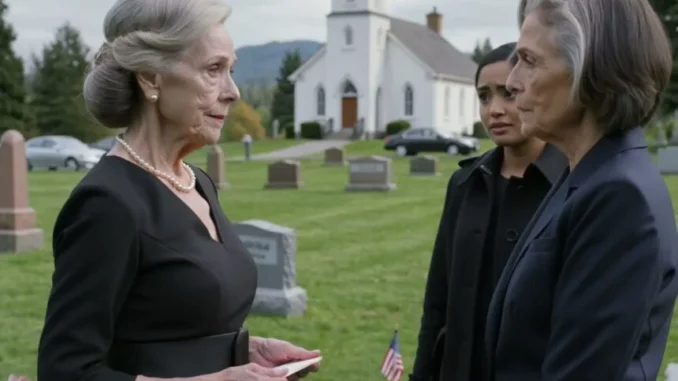
Dorothy Mae Whitfield had buried her parents in Calvary Baptist churchyard years ago, but nothing prepared her for standing there again for her husband, Robert. At 74, he died suddenly of a heart attack on a Tuesday morning, leaving her shocked and unprepared after 43 years of marriage. To the world, Robert was a dependable man—coach, church elder, school board member, a steady presence loved by many. To Dorothy, he was her safe place, a man who always came home after work trips she never questioned.
At the funeral, a stranger named Linda Morrison appeared, handing Dorothy an envelope and saying Robert had “other things she needed to know.” Days later, inside that envelope and a basement filing cabinet, Dorothy discovered the truth: Robert had been living a double life for nearly three decades. Alongside their family in Kentucky, he had another in Tennessee with Linda and two children—Brandon and Amy—financed through carefully hidden accounts and years of divided time, half his life spent in each household.
The revelation shattered everything Dorothy thought she knew. With attorney Paul Strickland, she uncovered decades of financial separation—bank accounts, property, school records—showing a deliberate, sustained second life. Robert had not been careless; he had been methodical, splitting time, money, and identity with precision.
Dorothy eventually met Linda, and instead of hatred, they shared a painful recognition: they had both loved the same man, both been deceived in different ways, and both raised children who were unknowingly half-siblings. The legal aftermath was complex but settled without court battles: Dorothy kept the family home and assets tied to her marriage, while Linda retained the Cookeville house. A portion of funds was set aside for Brandon and Amy in acknowledgment of their place in Robert’s life.
In time, the families began a cautious, uneasy connection. Dorothy’s children processed their grief in different ways—anger, silence, reflection—but all struggled with the same question: how much of their father had ever been real? Dorothy herself returned to teaching, finding stability again in the classroom, where truth and simplicity felt possible.
A year later, she had not forgiven Robert in any simple way. Instead, she carried a clearer understanding: her marriage had been both real and built alongside a lie. Forty-three years of love, children, and daily life had existed—but so had deception. Standing at his grave, she said only, “You should have told me,” not as rage, but as final truth.
What remained was not resolution, but acceptance of complexity: that a life can be genuine and broken at the same time, and that honesty, even too late, is something the living still deserve.!!
Leave a Reply